The story of Curiotex Industries Pakistan
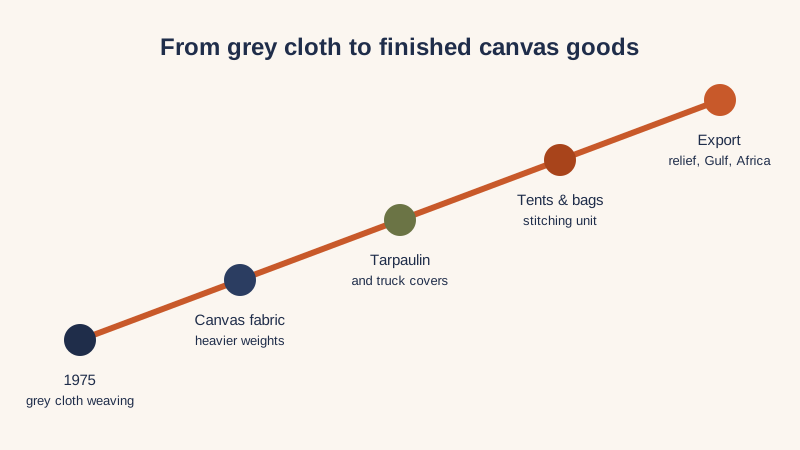
Curiotex Industries Pakistan began in 1975 as a family textile business producing grey cloth. In those early years the work was straightforward: buy cotton yarn locally, weave it into dependable fabric and sell it to converters who would turn it into something else. Over time the family noticed that the most demanding customers were the ones buying heavy cloth for outdoor use, and that those customers cared less about the lowest price than about cloth that did not let them down in the rain.
That observation shaped everything that followed. The business invested in heavier weaving, then in its own doubling frames so it could control yarn twist, then in dyeing so it could deliver steady colours, and finally in a stitching unit so it could sell finished goods instead of only rolls. Tarpaulins became the second-oldest product line; tents followed, and eventually tents for relief work became the product most associated with our name overseas.
We are still a family company. Decisions about fabric, pricing and which orders to accept are made by people who have spent their working lives around looms and sewing lines, not by a distant head office. That continuity is, in our view, one of the main reasons buyers come back.
What we specialise in
We describe ourselves as a pioneer from Pakistan specialising in canvas and canvas products. In practice that covers a focused set of goods, each of which we make from fabric produced in our own units.
Tents
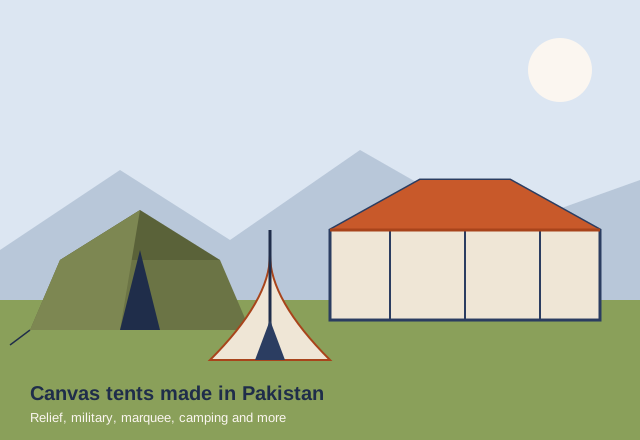
Family relief tents, winterized shelters, military and officer tents, marquees, store tents, school and hospital tents, camping and deluxe event tents. Browse the full range on canvas tents.
Tarpaulins and covers
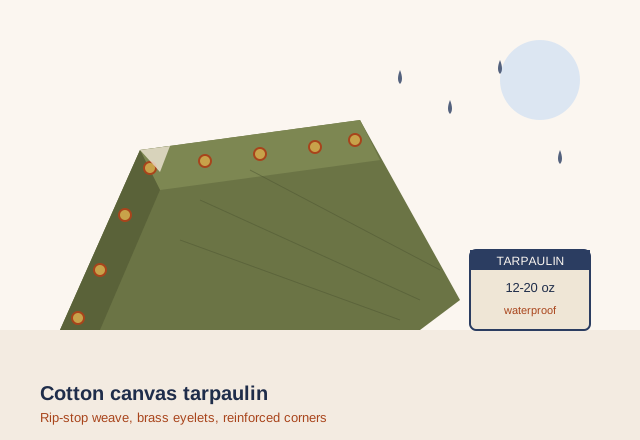
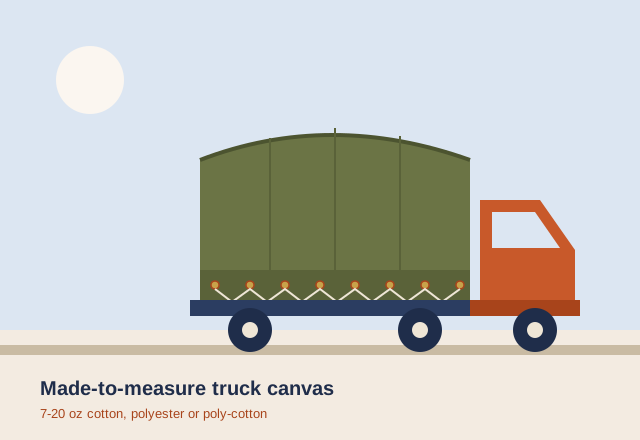
Rip-stop canvas tarps with eyelets and reinforcing patches, plus made-to-measure truck canvas for lorries, jeeps and machinery.
Canvas cloth in bulk
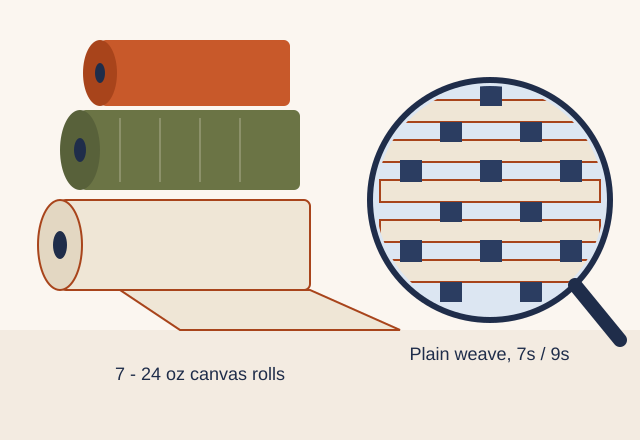
Plain canvas, drop cloth, ducting cloth, sheeting and half panama sold by the roll to converters and importers.
Bags and allied items
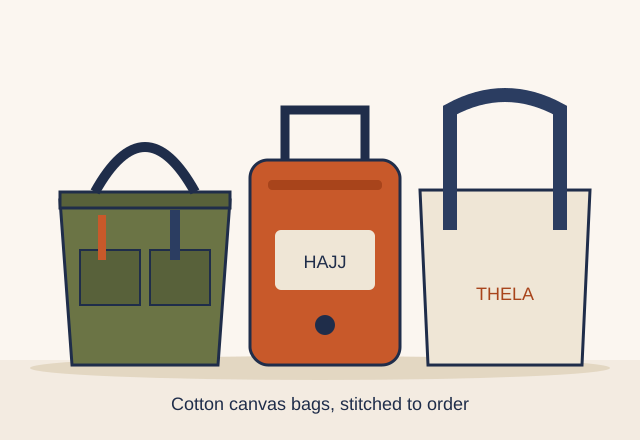
Tool totes, Hajj bags, travel bags and the canvas thela for Saudi Arabia, along with canvas covers of many kinds.
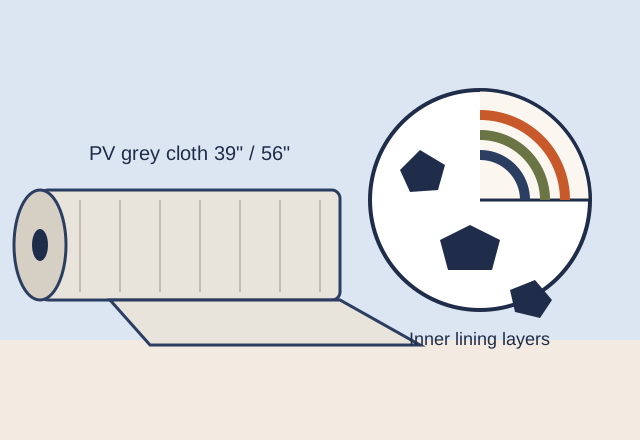
Alongside canvas, we continue the original business of grey polyester and blended cloth, now used mainly for football inner linings. It keeps our weaving skills broad and gives us a better understanding of synthetic yarns when buyers ask for poly-cotton covers.
Export markets Curiotex Industries Pakistan serves
Three regions account for most of our export shipments, and each has its own priorities.
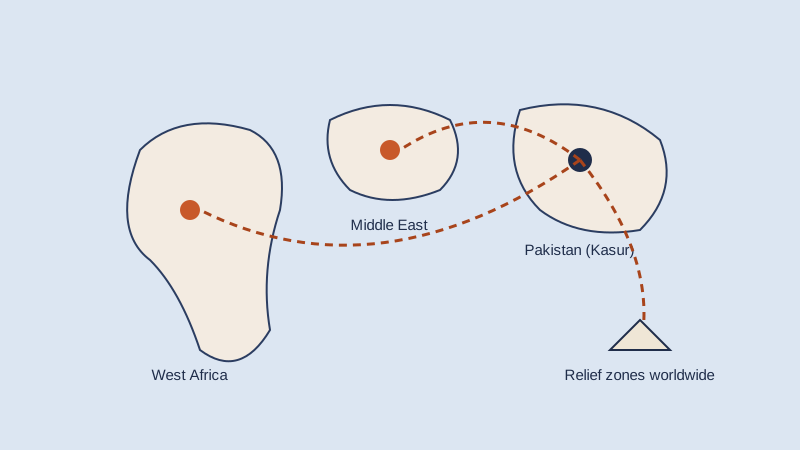
Disaster relief and humanitarian supply
Emergency relief tents are our priority export. When floods, earthquakes or displacement create sudden demand, relief buyers need shelters that are correctly specified, quickly produced and packed so they can be distributed in the field without confusion. We make family ridge tents, winterized tents, dispensary and hospital frame tents, and shelters built to the widely used UNHCR family-tent pattern. Our refugee tents page lists their sizes.
The Middle East
Gulf importers buy a wider mix: ducting cloth in large volumes, drop cloth, tents for seasonal and labour accommodation, Hajj bags for pilgrims and our zipperless canvas thela for the Saudi market. Heat resistance and UV performance matter more here than in most places, so we discuss fabric treatments with these buyers early.
West Africa
West African customers often combine tents, tarpaulins and canvas cloth in one consignment, sometimes with truck canvas for transport fleets. Our African refugee tent, with a heavier 500 to 525 gsm roof and 450 gsm walls, was developed for the rainfall and sun of that region.
Manufacturing capabilities in Kasur
Our factory includes complete twisting (doubling), weaving, dyeing and stitching facilities, plus a dedicated packing unit. Owning every stage gives us flexibility that is hard to achieve when fabric is bought in from outside mills. We can adjust the yarn twist to improve tear strength, change the pick density to raise water resistance, or switch the colour recipe to match a buyer's standard shade.
We can produce heavy-duty canvas that is:
- waterproof or water-impregnated, for shelters that face rain for months;
- rot-proof, so damp ground contact does not destroy the lower walls;
- termite-proof, important in tropical and semi-arid camps;
- abrasion resistant, for covers and tents pitched again and again;
- resistant to high temperatures, for hot climates and stove use.
Raw materials are purchased locally in Pakistan, which keeps our supply chain short and reduces the risk of delays at customs before production has even begun. You can read about each unit in detail on the Curio Units page.
How we work with buyers
We prefer close coordination to simply quoting a price and waiting. Many of our clients are procurement officers who know their requirements well but not the textile details that decide whether a tent survives a winter. Others are traders entering the canvas business for the first time. In both cases, our team spends time explaining the options before an order is placed.
- Understand the use. Who will use the product, for how long, in what climate and how often it will be moved.
- Recommend the fabric. Weight, weave and finish that fit the use, rather than the heaviest cloth by default.
- Agree a sample. We can make a sample from your design; it normally ships in about two weeks.
- Confirm terms. New customers usually pay by sight L/C or 70% advance.
- Produce and ship. Typical lead time is 30 to 45 days after approval, and you choose the shipping mode.
If something arrives defective, we accept the goods back for repair or replacement. We would rather fix a problem than lose a relationship.
Values that guide the business
Mission statements are easy to write and hard to live by. Ours are short, and we try to keep them practical.
Honest specifications
If you order 450 gsm, the fabric should weigh 450 gsm. We would rather explain a price difference than quietly substitute lighter cloth.
Usefulness first
Relief shelters and work covers are tools. We design them to be easy to pitch, repair and pack, not only to look good in a catalogue.
Long relationships
Many orders come from buyers who have worked with us before. Keeping them means answering the phone after the goods have shipped.
Steady improvement
We keep upgrading machinery and methods so that quality and output can rise together.
Our approach to quality and inspection
A tent rarely fails because of one dramatic flaw. It fails because a seam was sewn with too few stitches per inch, a batch of cloth was woven slightly loose, or the waterproofing was rushed. Our approach is to check the small things at each stage rather than relying on a single inspection at the end.
Yarn is checked for count and twist as it leaves the doubling frames. Greige fabric is measured for width and weighed for gsm before it goes for finishing, and visible weaving faults are marked so cutters can avoid them. After dyeing, shades are compared against the approved standard. In the stitching unit, supervisors check seam construction, eyelet placement and finished dimensions against the drawing. Finally, the packing team counts every component, so a tent bag that should contain poles, pegs and a groundsheet does not arrive short.
Many institutional buyers appoint their own inspection agencies before shipment. We welcome this. Inspectors can see goods on the floor, pull samples and check them against the agreed specification, and we will rework anything that does not match. For buyers who cannot travel, we can share photographs, measurements and fabric swatches from production lots.
Why a Pakistani family maker still makes sense
Global buyers have plenty of choice, and we know they compare us with mills in other countries. What we offer is a combination that is not easy to find: a cotton-growing economy behind us, a workforce raised around textiles, sea access through Karachi to the Gulf and Africa, and a family company small enough to listen yet experienced enough to deliver large relief orders.
Because we are not a trading house juggling dozens of unrelated products, our attention stays on canvas. That focus shows up in the details: the reinforcing patches placed where guy ropes pull, the wall height chosen so rain runs clear of the floor, or the way a truck cover is cut so its ropes line up with the hooks on the vehicle. Those details come from decades of feedback from the people who actually use our goods.
The team behind Curiotex
Our people are the reason the factory works. The company is run by a team of dedicated professionals supported by skilled machine operators, stitching staff and technical personnel. Supervisors on the weaving floor have years of experience reading fabric by eye and by hand, and the stitching unit is staffed by operators used to sewing heavy canvas, which is a different skill from garment sewing.
Commercial enquiries are handled by Haji Ghulam Hasan, who coordinates between buyers and the production floor. That direct line matters: when a buyer asks whether a stove pipe opening can be moved or a groundsheet changed from PE to PVC, the answer comes from someone who can walk into the factory and check.
Want to discuss a project with our team? Call +92 317 8885522, email info@curiotex.com or use the send inquiry form.
Where to find us: Kasur factory and Lahore office
Our factory and head office are at Street #8, Abu Ayoub Ansari Town, Kasur 55050, Pakistan. Kasur lies south-east of Lahore and has a long tradition of textile and leather work, which gives us access to experienced workers and local suppliers.
For meetings, our sales office is at PL-20 Siddiq Trade Center, Gulberg III, Lahore 54000. Lahore is easy to reach by air, and many overseas buyers combine an office visit with a trip to the factory to see production in progress. We also take part in some major industry fairs, where visitors can see fabric and finished products in person.
| Item | Details |
|---|---|
| Established | 1975, family-owned |
| Factory and head office | Street #8, Abu Ayoub Ansari Town, Kasur 55050 |
| Sales office | PL-20 Siddiq Trade Center, Gulberg III, Lahore 54000 |
| In-house units | Doubling, weaving, dyeing, stitching, packing |
| Main products | Tents, tarpaulin, truck canvas, canvas fabric, canvas bags, polyester fabric |
| Main export regions | Relief operations, Middle East, West Africa |
| Contact | Haji Ghulam Hasan, +92 317 8885522, info@curiotex.com |
Working with Curiotex Industries Pakistan
If you are comparing suppliers, we encourage you to ask every one of them the same questions: who weaves the fabric, who dyes it, who sews it and who will answer when something goes wrong. Our answer to all four is the same company. Look through our product catalogue, read how goods leave the factory on the shipment page, then send us your specification. We will reply with a clear offer and, where useful, suggestions that could save you money or improve performance in the field.
Frequently asked questions about Curiotex Industries Pakistan
When was Curiotex Industries Pakistan founded?
The business was established in 1975 as a family textile company producing grey cloth. It gradually added heavier canvas weaving, doubling, dyeing and stitching, and today manufactures and exports finished tents, tarpaulins, truck covers, bags and bulk canvas cloth from its factory in Kasur.
Is Curiotex a manufacturer or an export agent?
We are a manufacturer that exports its own products. Yarn twisting, weaving, dyeing, stitching and packing all take place in our Kasur units. We do not simply resell other mills' goods, which is why we can adjust specifications and take responsibility for quality.
Where are your factory and office located?
Our factory and head office are at Street #8, Abu Ayoub Ansari Town, Kasur 55050. Our sales office is at PL-20 Siddiq Trade Center, Gulberg III, Lahore 54000. Visitors are welcome at either location by appointment.
Which countries and regions do you export to?
Our main export areas are disaster-affected regions served by relief programmes, the Middle East and West Africa. We also supply buyers in other regions on request and sell widely within Pakistan to traders, transporters, event companies and institutions.
What is your main export product?
Emergency relief tents are our priority export, because refugee and disaster shelter demand exists all over the world. Canvas tarpaulins and canvas cloth in bulk follow closely, along with allied canvas items such as bags, covers and ducting cloth.
Do you hold UN supplier status or international certifications?
We do not claim UN approval or supplier status. Our relief tents are built to the widely used UNHCR family-tent pattern and to buyers' own specifications. We are happy to share fabric details and samples so your technical team or inspection agency can verify them.
Can I visit your factory before ordering?
Yes. Buyers often meet us at the Lahore office and then visit the Kasur factory to see weaving and stitching. We also display at some major industry fairs. Contact Haji Ghulam Hasan on +92 317 8885522 to arrange a visit.
Where do you source raw materials?
Our yarn and other raw materials are purchased locally in Pakistan. A short, domestic supply chain helps us keep costs steady and respond faster when a buyer changes the specification during sampling.
Do you help buyers choose the right product?
Yes. Our team regularly advises clients on fabric weight, finishes, groundsheet type and accessories based on the climate and intended use. Send the details through the inquiry form and we will suggest a suitable specification.